Look and listen
- Check dehumidifier display or remote monitor.
- Listen for unusual pump or equipment operation.
- Look for standing water, displaced liner, or new odor near the access.
- Confirm the door closes and seals correctly.
Crawl space maintenance
A sealed crawl space is easier to manage, but it is not maintenance-free. Simple inspections protect the liner, drainage, dehumidifier, and the home above.
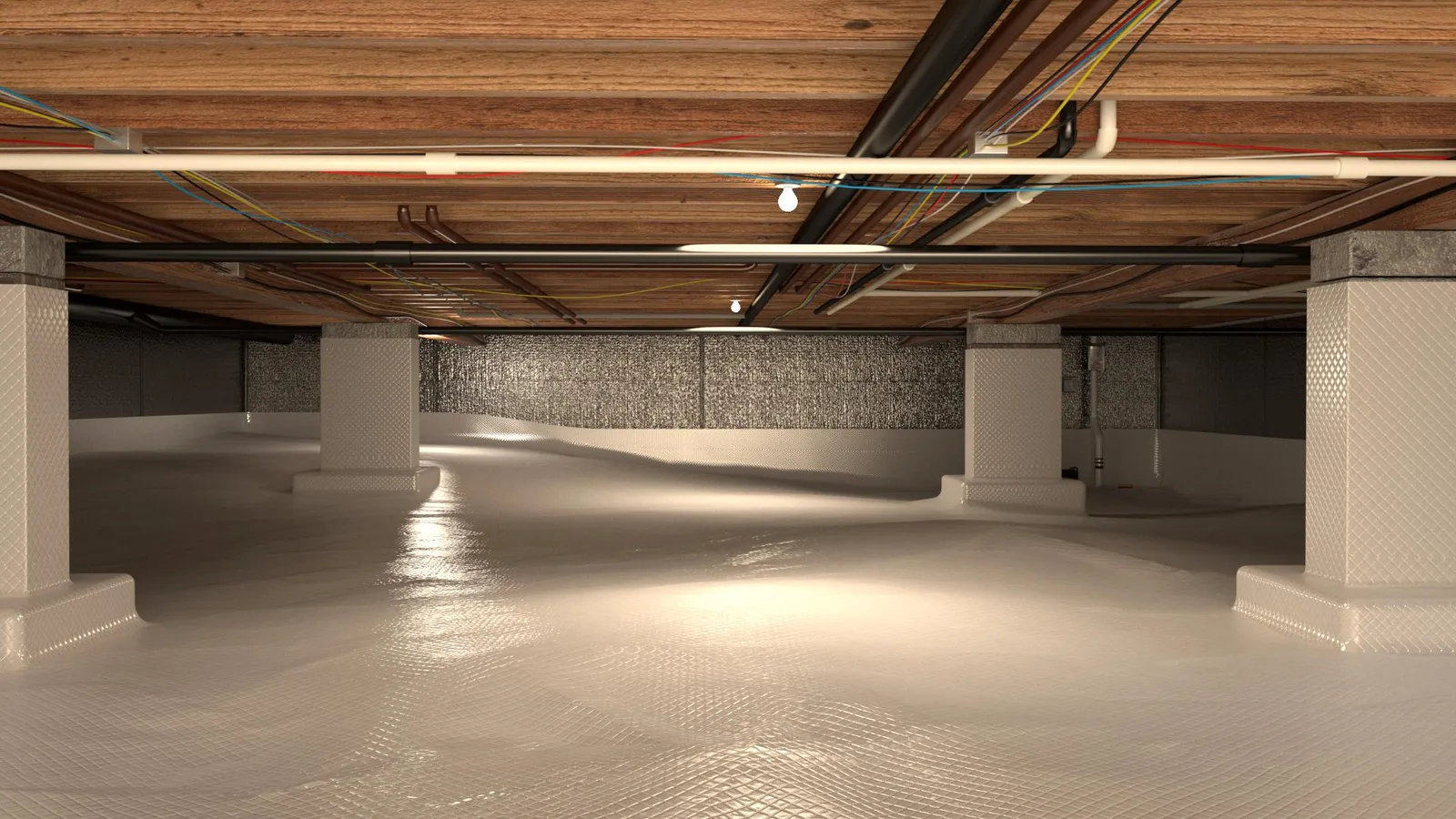
A finished crawl space still needs periodic checks. Inspect the liner, seams, wall edges, drains, sump, discharge, dehumidifier filter, condensate line, humidity reading, plumbing, ducts, and access route—especially after major storms or work by another trade.
A practical schedule
Protect the liner
Plumbers, HVAC technicians, electricians, cable installers, pest-control providers, and homeowners may all need access. Sharp tools, ladders, dragged equipment, removed tape, and repeated travel can puncture or displace the liner.
Tell every contractor that the crawl-space liner is part of a sealed moisture-control system. Use protective paths where work is frequent, keep spare compatible repair material available, and have cuts sealed with the correct method instead of household tape.
Dehumidifier and drainage
A dehumidifier cannot perform normally with a dirty filter, blocked intake, obstructed discharge, failed condensate pump, or disconnected drain. Keep storage and insulation away from the unit, follow the manufacturer’s service instructions, and investigate alarms or a sudden humidity change rather than simply lowering the setting.
Sump pumps and condensate pumps also need a working discharge path. Check valves, lids, alarms, power, and the point where water exits outside. A pump that runs but sends water back toward the foundation has not completed the job.
Exterior maintenance
Clogged gutters, disconnected downspouts, settlement, new landscaping, irrigation, and blocked swales can change water conditions months or years after encapsulation. Keep roof water moving away from the foundation and watch for new pooling after soil work or construction.
Encapsulation controls moisture at the crawl-space boundary. It should not be used as permission to ignore exterior water management.
Maintenance warning signs
Maintenance questions
Routine checks preserve the work and provide an early warning when water, equipment, or another trade changes the system.
Ask About a System CheckHomeowners should visually check accessible areas periodically and after major storms, plumbing events, or equipment alarms. A more thorough professional review can be scheduled based on the system, warranty, and site conditions.
Follow the equipment manufacturer’s instructions and adjust for dust, construction activity, pets, and actual loading. A clogged filter can reduce airflow and performance.
Document the location and weather conditions, then investigate promptly. Water on top of the liner may indicate plumbing, condensation, wall entry, drainage, or equipment discharge problems.
Yes. Anyone entering the crawl space should be told that the liner is part of the moisture-control system. Protect travel paths and have cuts or displaced seams repaired correctly.
No. It makes the crawl space easier to inspect and control, but gutters, drains, pumps, dehumidifiers, plumbing, access doors, and the liner still need attention.