Basic vapor barrier
- Mainly covers exposed soil
- May leave walls and vents open
- Reduces some ground vapor
- Lower material and labor scope
Crawl space vapor barriers
Reduce ground moisture with a barrier that is prepared, fitted, and sealed around the real shape of the crawl space.
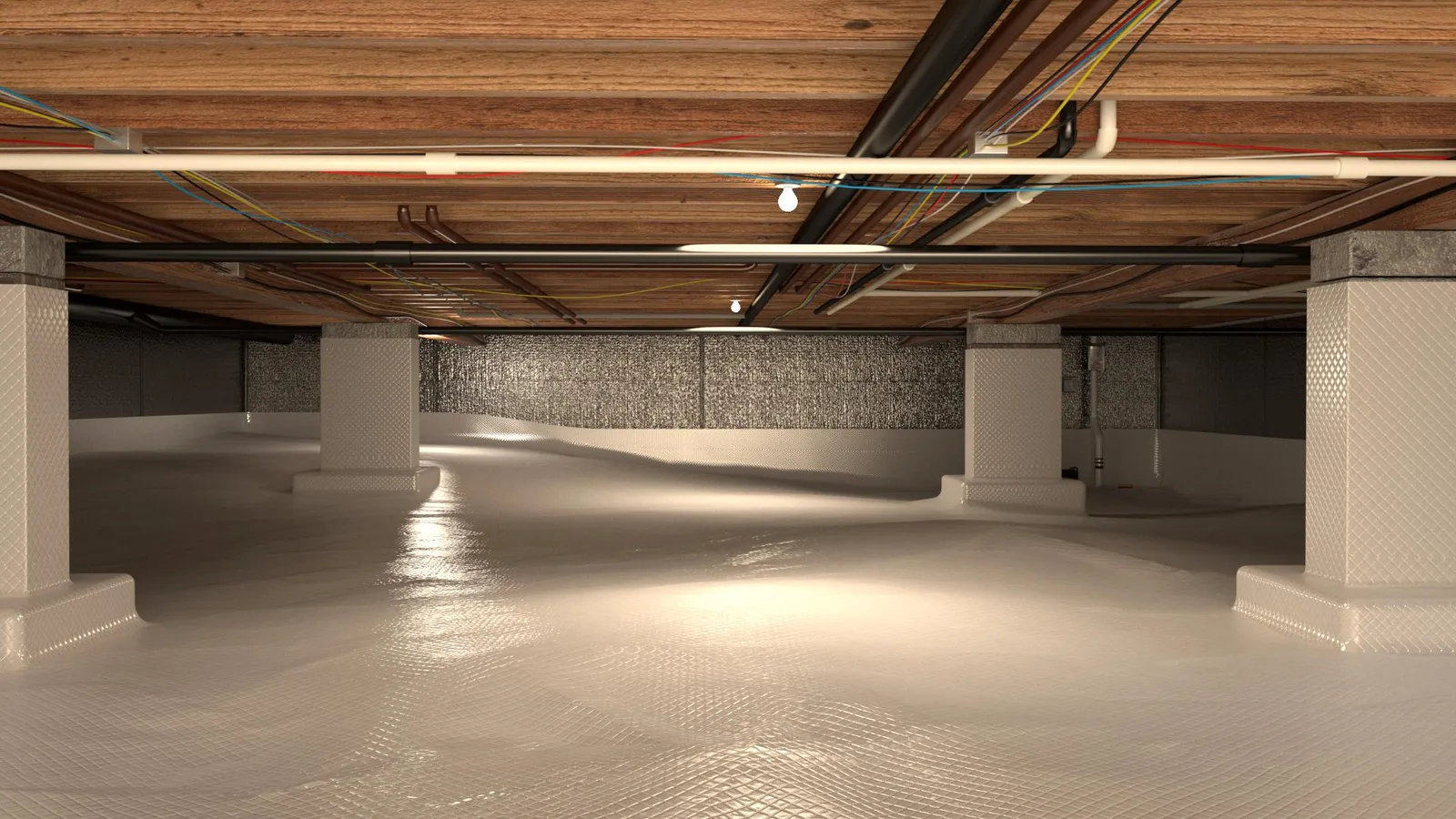
A crawl space vapor barrier reduces moisture evaporating from exposed soil. A complete vapor-seal system also addresses seams, edges, pipes, posts, walls, piers, vents, and access openings as required by the design. A floor-only ground cover and full encapsulation are not the same scope.
Barrier versus encapsulation
A basic vapor barrier lies over exposed soil to reduce evaporation. Full encapsulation creates a more complete boundary by extending and sealing the liner to walls, piers, seams, penetrations, and access points.
Both can be useful, but they solve different levels of moisture exposure. The inspection should determine which one matches the home.
Installation details
Sharp debris, old material, standing water, and loose insulation should be addressed before the liner is placed.
Overlaps, piers, plumbing penetrations, columns, and wall transitions are sealed so vapor cannot bypass the system.
The liner is not a drainage system. Bulk water needs a defined collection and discharge plan.
Common questions
We inspect the home before recommending a system or piece of equipment.
Ask About Your Crawl SpaceThe best barrier is one that is appropriate for the site and installed as a complete system. Thickness matters, but seam sealing, wall attachment, pier details, puncture protection, drainage, and workmanship matter just as much.
In full encapsulation, the liner commonly extends up foundation walls and around piers while preserving any required termite inspection gap. A floor-only barrier is a more limited system.
Old material may hide water, debris, pests, or damage and can interfere with a clean seal. The inspection determines whether it should be removed.
No. It blocks vapor but does not replace drainage. Active water needs a route out of the crawl space.
Yes. Overlaps, seams, penetrations, edges, and transitions should be sealed according to the system design so moist air does not bypass the liner.
Homeowners sometimes use “vapor seal crawl space” to describe either a basic ground vapor barrier or a full encapsulation. Those are not automatically the same. The proposal should state whether the floor, walls, piers, seams, vents, doors, and penetrations are sealed and how water and humidity will be managed.
Choosing the liner
Material thickness is only one decision. A crawl space used frequently by plumbers or HVAC technicians may need stronger travel paths and more puncture protection than a low space that is rarely entered. Rocky soil, construction debris, sharp edges, piers, and narrow access points also affect the specification.
The floor should be prepared before the liner is installed. Wrinkles, loose overlaps, unsealed penetrations, and exposed soil at edges can reduce performance even when the material itself is heavy.
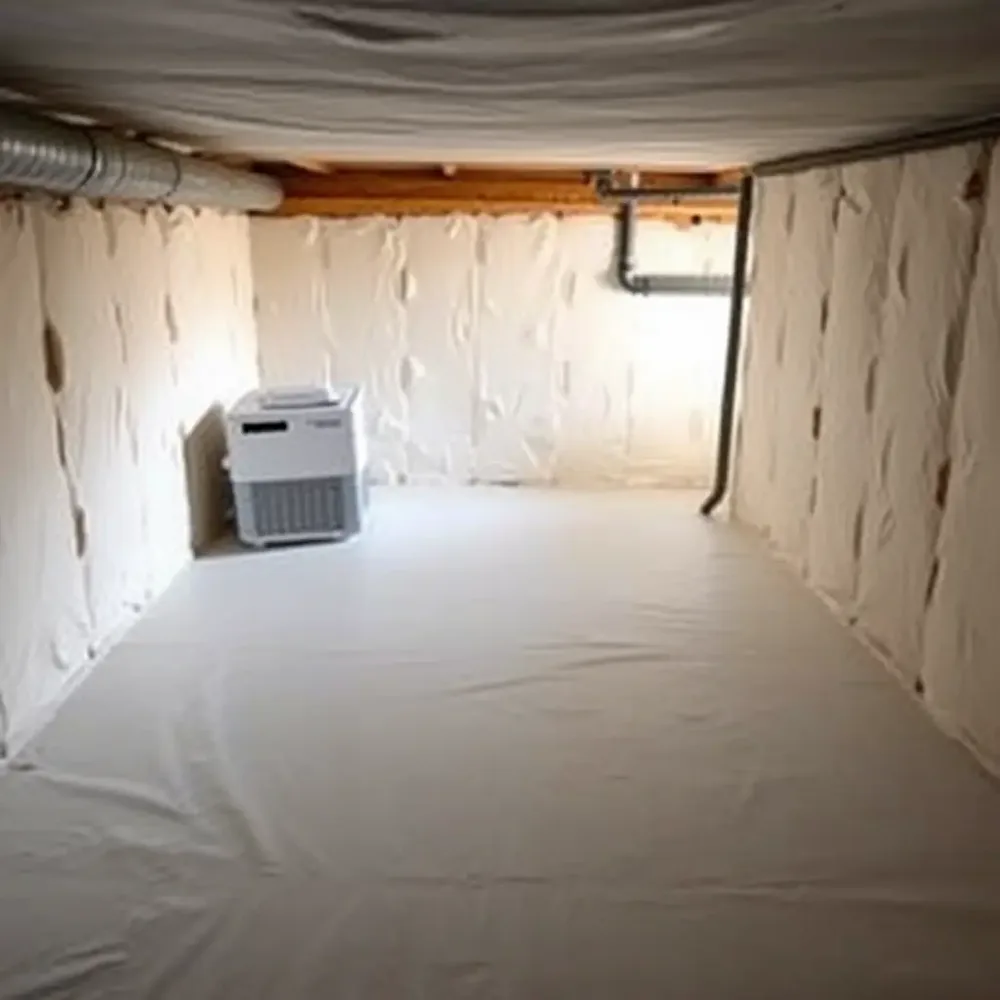
After installation
Future plumbing, electrical, HVAC, cable, and pest work can cut, pull, or puncture the liner. The homeowner should know how damage is repaired and which areas should be inspected after another contractor leaves.
Read the crawl space maintenance guide for a simple inspection schedule, or compare this service with a complete system in our encapsulation versus vapor barrier guide.
When a new barrier is not the first step
Do not use new plastic to hide an active plumbing leak, standing water, electrical hazard, unstable support, severe pest condition, or material that must be removed. Those conditions should be corrected or clearly assigned to the proper trade first.
When partial repairs may work
If the material is clean, durable, well placed, and compatible with the planned system, limited seam, edge, or penetration repairs may be possible. The inspection determines whether the existing liner can remain part of a continuous boundary.
Building-science reference
The U.S. Department of Energy publishes crawl-space vapor-retarder guidance covering prepared ground, overlapped and sealed seams, penetrations, walls, piers, and bulk-water management.