Crawl space questions answered
Atlanta Crawl Space Encapsulation FAQ
Answers about encapsulation cost, vapor barriers, dehumidifiers, standing water, mold, insulation, and the inspection process.
Ask About Your Home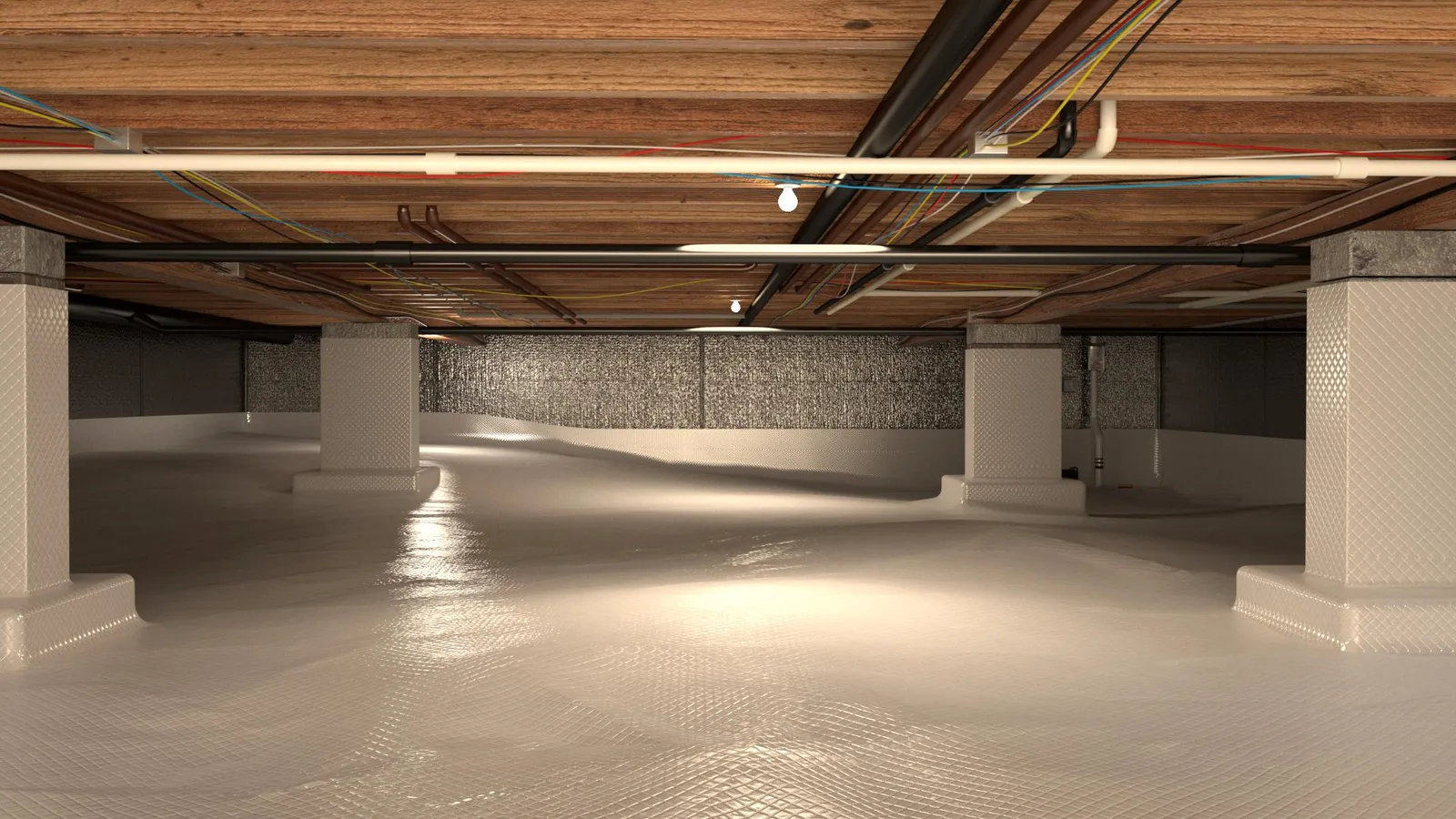
What is the difference between a vapor barrier and full encapsulation?
A basic vapor barrier mainly covers the soil. Full encapsulation extends the liner to foundation walls and piers, seals seams and exterior openings, and may add drainage or dehumidification when conditions require it.
How much does crawl space encapsulation cost in Atlanta?
The cost depends on square footage, crawl height, access, cleanup, water entry, mold conditions, insulation, liner coverage, drainage, and whether equipment is needed. We provide a written quote after inspecting the space.
Does every crawl space need a dehumidifier?
No. A dehumidifier should be recommended when the expected moisture load cannot be managed reliably by sealing and drainage alone. The unit also needs a dependable way to drain.
Can encapsulation fix standing water?
Encapsulation blocks ground vapor but should not trap active water beneath the liner. Standing water needs to be traced and controlled with drainage, grading, gutter, downspout, sump, or other corrections before the system is finished.
Do you remove mold in crawl spaces?
Yes, when mold cleanup is part of the agreed scope. The inspection also looks for the moisture source because cleanup without moisture control can leave the same conditions in place.
What is included in crawl space encapsulation?
The exact scope varies, but a complete system commonly includes preparation, a sealed floor and wall liner, vent and penetration sealing, and a plan for drainage and humidity. Insulation and remediation are added when needed.
Is encapsulation just plastic on the ground?
No. Plastic on the soil is a basic vapor barrier. Encapsulation treats the crawl space as a system by sealing edges, seams, walls, piers, vents, and penetrations and by addressing water and humidity.
Should water problems be repaired first?
Yes. Active water should be traced and controlled before the final liner is installed. Otherwise, water may collect below the system or create pressure at walls and seams.
How long does crawl space encapsulation take?
Project length depends on size, access, cleanup, drainage, remediation, and equipment. Many straightforward projects take several working days, while more involved spaces take longer.
Can I use the crawl space for storage afterward?
A clean sealed crawl space is easier to inspect and may be suitable for limited storage, but items should not block equipment, drains, plumbing, electrical components, termite inspection gaps, or access routes.
Can you quote crawl space encapsulation by square foot over the phone?
Square footage is only one factor. Access, cleanup, walls, piers, standing water, insulation, mold conditions, drainage, and equipment can change the scope substantially, so an inspection is needed for a reliable written quote.
Why are encapsulation estimates so different?
Some estimates cover only floor plastic, while others include wall coverage, sealed seams, vent closure, drainage, insulation, dehumidification, cleanup, and warranties. Compare the exact scope line by line.
Is the cheapest vapor barrier the same as encapsulation?
No. A basic ground cover can reduce some soil vapor, but it does not automatically seal walls, vents, piers, seams, or air leaks and does not solve active water entry.
Does mold removal add to the cost?
It can. The amount and location of affected material, access, containment needs, cleaning method, and removal of damaged insulation or debris all affect the work.
Do you provide a written estimate?
Yes. After the inspection, the proposed work should be described in writing so you can see what is included, what is optional, and what is excluded.
What is the best vapor barrier for a crawl space?
The best barrier is one that is appropriate for the site and installed as a complete system. Thickness matters, but seam sealing, wall attachment, pier details, puncture protection, drainage, and workmanship matter just as much.
Does a vapor barrier go up the walls?
In full encapsulation, the liner commonly extends up foundation walls and around piers while preserving any required termite inspection gap. A floor-only barrier is a more limited system.
Can new plastic be installed over old plastic?
Old material may hide water, debris, pests, or damage and can interfere with a clean seal. The inspection determines whether it should be removed.
Will a vapor barrier stop standing water?
No. It blocks vapor but does not replace drainage. Active water needs a route out of the crawl space.
Do seams need to be taped?
Yes. Overlaps, seams, penetrations, edges, and transitions should be sealed according to the system design so moist air does not bypass the liner.
Does every encapsulated crawl space need a dehumidifier?
No. Some spaces can remain controlled through sealing, drainage, and conditioned-air strategies. Others need dedicated drying because of size, leakage, moisture load, or local conditions.
Where does the water from a crawl space dehumidifier go?
The condensate needs a dependable drain path, such as an approved gravity drain or pump system. It should not simply discharge onto the crawl space floor.
How is a crawl space dehumidifier sized?
Sizing considers crawl-space volume, moisture load, air leakage, drainage, temperature, and the target humidity—not just the home’s square footage.
What maintenance is required?
Filters, coils, drains, and pumps need periodic inspection and cleaning. The unit should remain accessible and the humidity setting should be checked.
Can a portable household dehumidifier be used?
Portable units may not be designed for crawl-space temperature, drainage, duty cycle, or service access. Equipment should be selected for the environment and installed safely.
What causes standing water in a crawl space?
Common sources include poor grading, short or disconnected downspouts, surface runoff, groundwater, wall seepage, plumbing leaks, and failed or missing drainage.
Will encapsulation alone stop water?
No. Encapsulation controls vapor and air movement. Bulk water needs to be collected, redirected, repaired, or pumped away before the liner is finalized.
Do all crawl spaces need a sump pump?
No. A sump is useful when water must be collected at a low point and discharged. Homes with no recurring bulk-water issue may not need one.
Should gutters and downspouts be checked?
Yes. Roof water should be carried away from the foundation. Exterior water management is often the first and least disruptive place to start.
Can water collect beneath the liner?
It can if active water is not controlled or if drainage is incomplete. The system should be designed so expected water has a route to collection and discharge.
Should wet crawl space insulation be removed?
Wet, contaminated, damaged, or repeatedly falling insulation may need removal. The cause of moisture should also be corrected before replacement.
Where should crawl space insulation be installed?
The answer depends on whether the crawl space remains vented or becomes sealed. In a sealed crawl space, the thermal boundary often changes, so insulation should match the final design and applicable requirements.
Can old insulation stay during encapsulation?
Sometimes, but it can hide framing, moisture, pests, or mold and can interfere with air sealing. The inspection determines whether it remains useful.
Why does insulation fall from the floor joists?
Moisture, gravity, failed supports, pests, compression, and repeated disturbance can cause batts to sag or fall.
Does encapsulation replace insulation?
No. Encapsulation controls vapor and air; insulation controls heat flow. They work together but perform different jobs.
Can crawl space mold come back after cleaning?
Yes, if moisture remains high or materials continue getting wet. That is why the remediation scope should include a plan for water, humidity, ventilation, leaks, and insulation.
Do you test mold species?
Visual inspection and cleanup scope are different from laboratory testing. When identification or clearance testing is required, an independent qualified testing professional may be appropriate.
Does encapsulation kill mold?
No. Encapsulation changes moisture conditions but is not a substitute for cleaning or removing affected materials included in the remediation scope.
Should insulation be removed during mold work?
Insulation that is wet, contaminated, damaged, or blocking access may need removal. The decision depends on condition and the agreed scope.
Can you guarantee mold will never return?
No responsible contractor can guarantee that a building will never experience future moisture or growth. The goal is to clean affected areas and correct the conditions that can support recurrence.
Need more than a short answer?