Moisture assessment
Confirm that bulk water, plumbing leaks, and major air leakage are addressed first.
Crawl space dehumidifiers
A dehumidifier works best after water entry and air leakage have been addressed—not as a substitute for them.
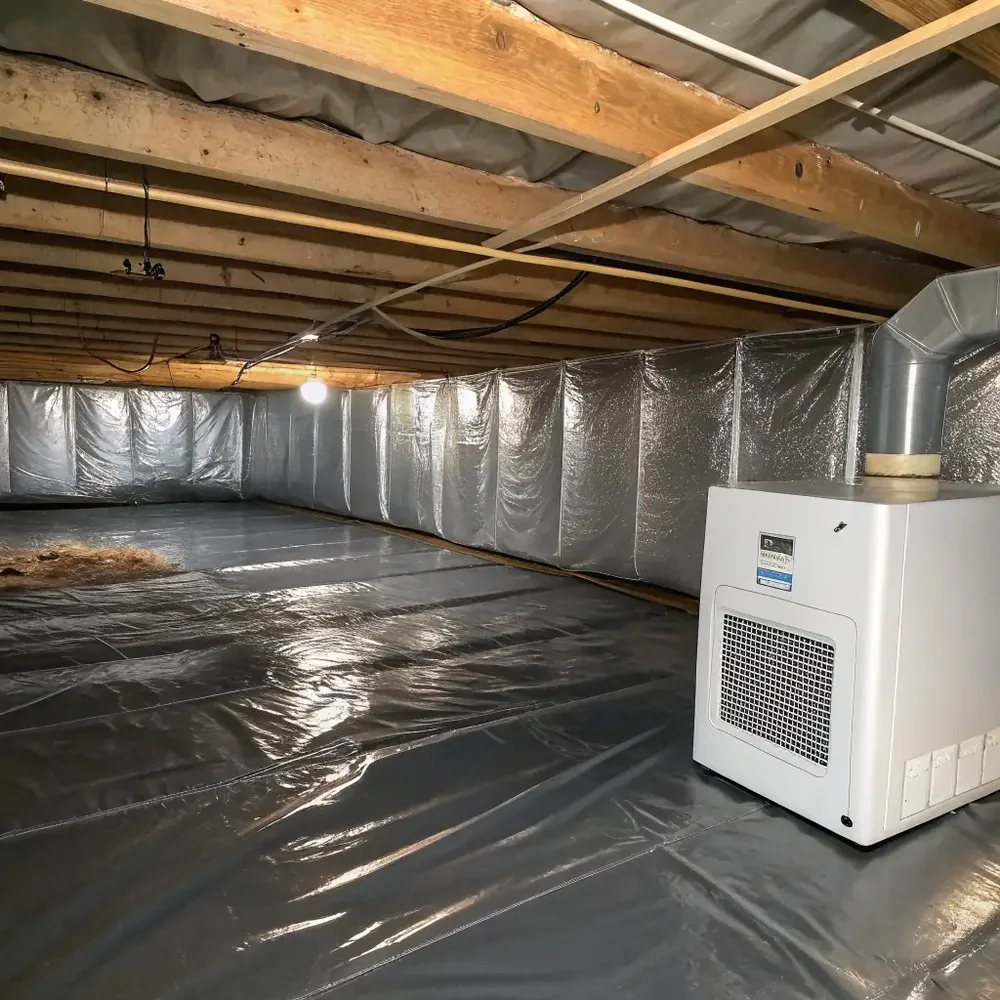
A crawl space dehumidifier should be selected after bulk water and major air leaks are addressed. The plan must include capacity, air circulation, electrical access, a dependable condensate route, filter clearance, and a way to monitor relative humidity. Equipment alone cannot correct standing water or an open, humid crawl space.
Active humidity control
Choosing dehumidifiers for crawl space use requires more than comparing pint ratings. The equipment must match the space, temperature range, moisture load, airflow path, drain route, electrical supply, and future service access.
Encapsulation reduces moisture entry, but some crawl spaces still need active drying. The unit must be sized for the space, placed where air can circulate, and connected to a reliable drain.
Installing equipment without first controlling standing water or major air leaks can make the unit run harder without solving the source.
What a complete installation includes
Confirm that bulk water, plumbing leaks, and major air leakage are addressed first.
Choose equipment for volume, conditions, target humidity, and expected runtime.
Position the unit so air can move through the crawl space rather than short-cycle in one area.
Provide a gravity drain or condensate pump route that can be inspected and serviced.
Keep electrical connections appropriate and leave enough space for filter and service access.
Verify the humidity setting and explain routine filter, drain, and equipment checks.
Common questions
We inspect the home before recommending a system or piece of equipment.
Ask About Your Crawl SpaceNo. Some spaces can remain controlled through sealing, drainage, and conditioned-air strategies. Others need dedicated drying because of size, leakage, moisture load, or local conditions.
The condensate needs a dependable drain path, such as an approved gravity drain or pump system. It should not simply discharge onto the crawl space floor.
Sizing considers crawl-space volume, moisture load, air leakage, drainage, temperature, and the target humidity—not just the home’s square footage.
Filters, coils, drains, and pumps need periodic inspection and cleaning. The unit should remain accessible and the humidity setting should be checked.
Portable units may not be designed for crawl-space temperature, drainage, duty cycle, or service access. Equipment should be selected for the environment and installed safely.
Selection should account for crawl-space volume, temperature, air leakage, soil and masonry moisture, drainage, divided areas, target humidity, condensate removal, electrical requirements, and access for filter changes and repairs. The unit should support a complete moisture-control plan rather than compete with standing water or open vents.
Equipment selection
Capacity depends on space volume, air leakage, soil vapor, damp masonry, drainage, temperature, and the target operating range.
The unit needs open intake and discharge paths. Divided crawl spaces may need ducting, transfer openings, or more than one air-distribution strategy.
Water must leave through a reliable gravity drain or condensate pump. The discharge route should be visible, protected, and serviceable.
Power should match the manufacturer’s requirements and remain accessible without extension-cord improvisation or exposure to water.
Filters, coils, drain connections, pumps, and controls need enough room for routine maintenance without damaging the liner.
A remote sensor or visible display can reveal a blocked drain, dirty filter, open access door, or new water source before damage spreads.
When the unit runs too much
A unit may run longer during humid weather, but constant operation can also point to an open vent, loose access door, liner gap, standing water, blocked filter, undersized equipment, short cycling, disconnected drain, or a new plumbing leak.
Lowering the humidity setting does not fix those conditions. Inspect the crawl space and equipment first.
Routine care
When not to add equipment yet
A dehumidifier removes water from air. It is not designed to overcome an open plumbing leak, flooded soil, uncontrolled wall seepage, open vents, or a loose access door indefinitely. Correct the largest moisture sources first so the equipment can maintain the space efficiently.
Replacement planning
All mechanical equipment eventually requires service or replacement. The route, platform, electrical connection, drain, ducting, and liner details should allow the unit to be changed without dismantling the crawl space.
Equipment reference
ENERGY STAR explains current dehumidifier efficiency ratings, capacity terminology, humidistats, water-removal options, and maintenance considerations.