Ground vapor
Moisture in the soil evaporates into a crawl space when exposed earth or poorly sealed plastic leaves a path upward.
Crawl space moisture problems
Moisture is not one problem. It moves as liquid water, water vapor, and humid air—and the repair must control the form that is actually entering the crawl space.
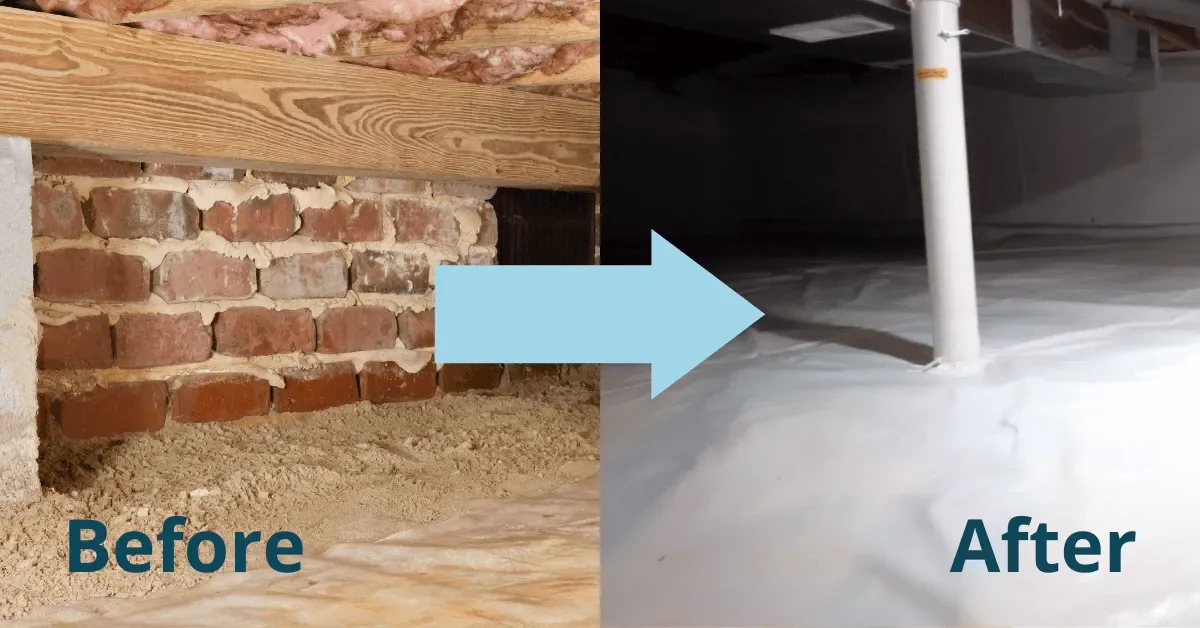
Water can reach a crawl space as liquid flow, soil vapor, humid outside air, condensation on cool surfaces, or a plumbing and HVAC leak. The repair should match the transport path. A liner helps with ground vapor, but it does not replace drainage, leak repair, air sealing, or properly planned humidity control.
Six common moisture sources
Several sources can be active at once, which is why a single product rarely explains the entire solution.
Moisture in the soil evaporates into a crawl space when exposed earth or poorly sealed plastic leaves a path upward.
Roof water, short downspouts, negative grade, landscaping, or concentrated discharge can deliver stormwater toward the foundation.
Water can move through walls, joints, low areas, or soil when the surrounding ground becomes saturated.
Supply lines, drains, condensate lines, fixtures, and appliances can wet insulation and framing without an exterior weather event.
Warm moisture-laden air can enter through vents, doors, gaps, and penetrations, then raise relative humidity in the cooler crawl space.
Ducts, pipes, masonry, and other cool surfaces can collect water when the surrounding air reaches its dew point.
Leaking supply or return ducts can change temperature, pressure, and air movement while also spreading odors or drawing crawl-space air.
Old insulation, cardboard, wood scraps, debris, and previous liners can hold moisture and obscure the true condition of the floor.
The correct order
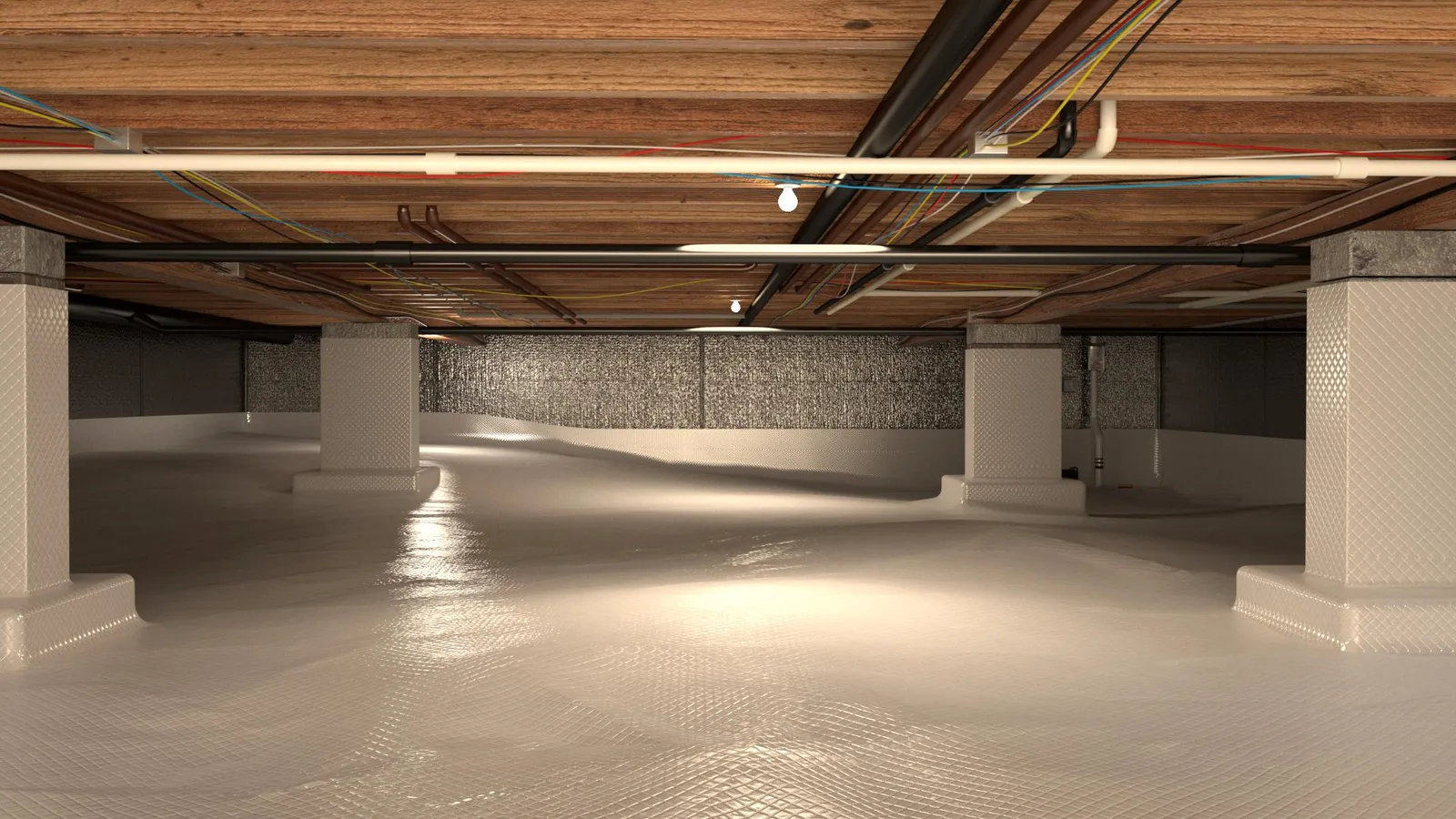
Finished encapsulation should not hide active water beneath a clean liner. The work sequence matters because each layer depends on the one before it.
Why symptoms show up upstairs
Openings around wiring, plumbing, ductwork, framing, and access points allow air to move between the crawl space and occupied rooms. Pressure differences and temperature changes can carry odors and moisture-related pollutants through those openings. That is why a musty room, cupped flooring, or persistent indoor humidity can justify a crawl-space inspection even when the homeowner rarely enters the space.
Not every indoor symptom originates below the house, but the crawl space should be included in the investigation when visible moisture, wet materials, or odor is present.
Solution map
Moisture questions
A moisture inspection is less expensive than installing the wrong system and discovering that the original water path remains.
Request a Moisture InspectionExposed soil, humid outside air, foundation leakage, damp masonry, plumbing, and condensation can raise humidity without leaving a visible puddle.
In hot-humid weather, outside air can carry significant moisture. When that air reaches cooler crawl-space surfaces, relative humidity rises and condensation may form. The full building design must be considered before vents are changed.
It reduces moisture evaporation from the soil, but it does not repair plumbing leaks, stop liquid water, seal outside air, dry wet materials, or replace drainage.
There is no single number that replaces inspection. The goal is to keep materials dry and avoid sustained conditions that support condensation or biological growth. Equipment settings should match the system design and manufacturer guidance.
Fans can help or hurt depending on the air source, weather, pressure, and crawl-space design. Moving humid outdoor air through a cool crawl space may increase moisture rather than reduce it.
General homeowner references: U.S. EPA mold and moisture information and the U.S. Department of Energy crawlspace guide. Site-specific design and local code requirements should be evaluated for the individual home.